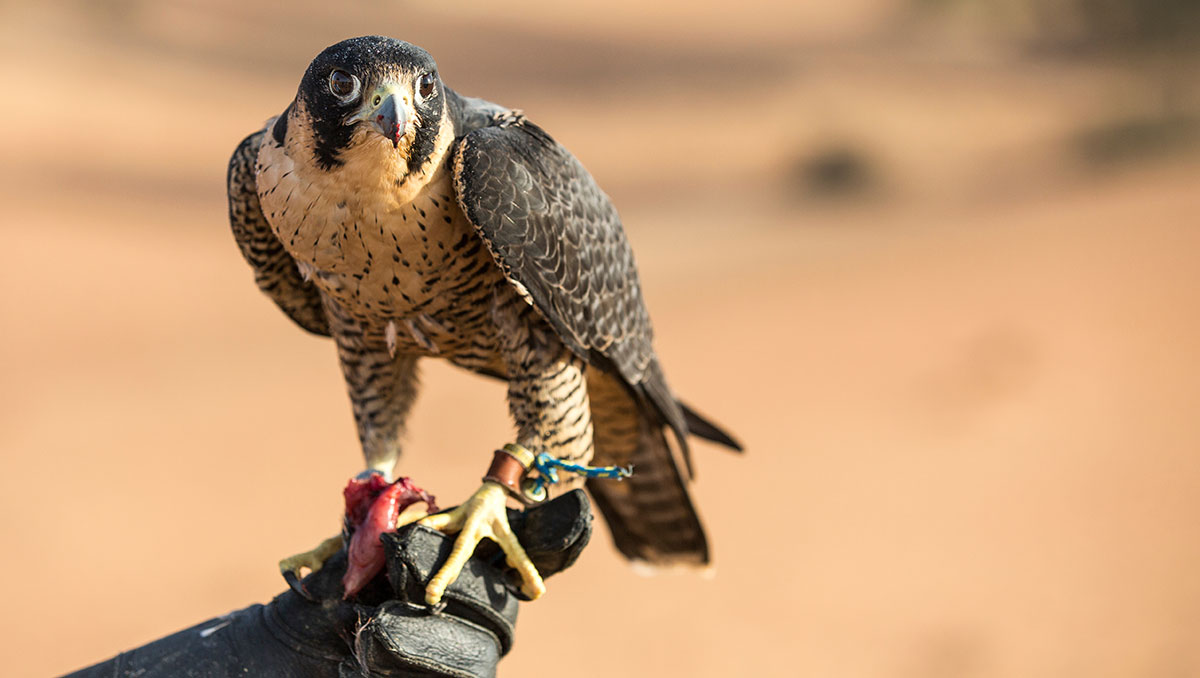
Falconry is often seen as an ancient art, a practice that connects humans to nature through the training of birds of prey. Growing up in Georgia, I learned falconry from my grandfather, a man who understood birds as deeply as he understood the land. He taught me to watch the skies, notice subtle changes in flight patterns, and interpret behaviors that most people overlook.
What many do not realize is that these skills, honed over centuries, are invaluable to modern wildlife research. Falconers have long been natural observers, tracking bird migrations, hunting habits, and seasonal behaviors. Today, the knowledge accumulated through generations of falconers is being combined with scientific methods to better understand and protect raptors and other wildlife.
Tracking Migration and Behavior
One of the most important contributions of traditional falconry to modern research is in tracking migratory patterns. In the past, falconers would notice when certain birds returned to specific regions, where they nested, and when they hunted. This information was passed down orally and recorded in journals, forming a detailed map of wildlife movement across vast landscapes.
Modern researchers use satellite tracking and GPS technology to study migrations in real time, but traditional falconry provides context. When a falconer shares insights about behavior, feeding habits, or preferred hunting grounds, scientists gain a more complete picture. This collaboration allows for more accurate predictions about migration routes, stopover sites, and potential threats along the way.
Breeding and Conservation Insights
Falconers have also contributed to understanding breeding behavior in raptors. Observing nesting patterns, courtship displays, and chick development has long been part of falconry practice. This knowledge has informed modern breeding programs for endangered species.
In Georgia and neighboring countries, falconers work alongside wildlife biologists to monitor nests, protect eggs, and support fledglings. By combining traditional methods with modern monitoring, we can ensure higher survival rates for young birds. Falconers’ intimate understanding of raptor behavior helps identify which nests are vulnerable, how parents respond to threats, and the optimal conditions for raising chicks.
Ethical Training as a Research Model
The principles of falconry also offer a model for ethical wildlife interaction. Training a bird of prey requires patience, respect, and careful observation. You cannot force cooperation; the bird must trust you and respond willingly. This philosophy mirrors the ethical standards required in modern research, where animals are studied without causing harm or undue stress.
For example, when attaching GPS trackers or monitoring devices, understanding how a bird perceives human interaction is critical. Falconers’ experience in handling birds with minimal stress is directly applicable, allowing researchers to gather data while maintaining the well-being of the animals. In this way, traditional falconry informs ethical standards in fieldwork.
Community Knowledge and Citizen Science
Falconry also serves as a bridge between local communities and scientific research. Many rural areas in the Caucasus and Central Asia have limited access to formal scientific resources, yet they are home to incredible biodiversity. Local falconers are often the first to notice changes in raptor populations, the arrival of new species, or unusual behaviors caused by environmental shifts.
Engaging these communities in wildlife research allows for a broader understanding of ecosystems. Falconers can act as citizen scientists, reporting observations and participating in monitoring programs. Their traditional knowledge complements laboratory research, creating a network of observation that covers areas scientists cannot always access.
Cultural Heritage Supports Conservation
Another benefit of integrating falconry into research is that it strengthens cultural and conservation ties. By respecting and preserving traditional practices, researchers gain the trust and cooperation of local communities. Falconry is more than a hobby; it is a cultural heritage. When communities see that their knowledge is valued in scientific research, they are more likely to engage in conservation efforts.
In my work with falconers across Georgia and the Caucasus, I have seen this dynamic in action. Families who have hunted and trained birds for generations now participate in monitoring endangered raptors, sharing insights and protecting critical habitats. Traditional falconry becomes a tool not only for preserving culture but also for safeguarding biodiversity.
Education and the Next Generation
Traditional falconry also plays a vital role in education. Young people who learn the art of falconry gain hands-on experience in observing wildlife, understanding behavior, and appreciating ecological balance. This foundation inspires future researchers, conservationists, and policymakers.
By combining falconry with scientific research programs in schools and communities, children learn to value both culture and conservation. They see that understanding nature requires both observation and curiosity. In this way, traditional falconry continues to shape the minds of those who will protect our ecosystems in the years to come.
A Collaborative Future
The partnership between traditional falconry and modern research is a perfect example of how culture and science can support each other. Falconers contribute decades of observation, intuition, and practical knowledge. Scientists provide tools, methods, and global networks to amplify the impact. Together, this collaboration ensures that birds of prey and their habitats are protected for generations.
For me, falconry has always been more than a tradition. It is a bridge between humans and nature, a way to understand the intricate relationships within ecosystems. By bringing traditional falconry into modern wildlife research, we preserve not only the birds we love but the heritage and knowledge that help sustain them.
Conclusion
Traditional falconry is a treasure trove of ecological insight. From migration patterns to breeding behavior, ethical handling, and community knowledge, the skills passed down through generations provide invaluable support to modern research. As we face global environmental challenges, combining the wisdom of falconers with scientific innovation offers a powerful way to protect birds of prey and the ecosystems they inhabit.
Through this partnership, we honor both culture and nature, ensuring that falconry continues to soar in relevance, guiding us toward a future where tradition and conservation work hand in hand.